

“The morning wind scatters the robe of the night,
threaded with gold and woven with dreams.”
Hafez (Persian Poet)
Gold has captivated human imagination for millennia. In the ancient world, it was never simply a precious material but a language of power, divinity and artistry. In the Islamic world, the Ottoman courts transformed gold into a hallmark of imperial culture, from gilded textiles and illuminated manuscripts to ceremonial attire woven with gold thread. Earlier, in ancient Egypt, Cleopatra’s court used gold to signify protection and royal authority. In Persia, gold embroidery adorned imperial robes. Across India, Zari goldwork embellished garments worn by nobility and brides, while in China, gold thread was reserved for emperors. In Europe, Byzantine and medieval garments shimmered with gold to convey sacredness and status.
It marks identity, ceremony and cultural expression.
Saudi Arabia and the wider MENA region share this legacy. Gold has long been woven into garments for weddings, celebrations and significant cultural moments. In the Gulf, gold Zari embroidery elevated abayas and ceremonial attire. In Egypt, gold work shimmered across traditional dresses. In Saudi Arabia, gold appears in Naqda embroidery, Najdi geometric patterns and the ornate detailing of regional garments. Gold symbolises honour, heritage and artistry, and its presence signals cultural pride.
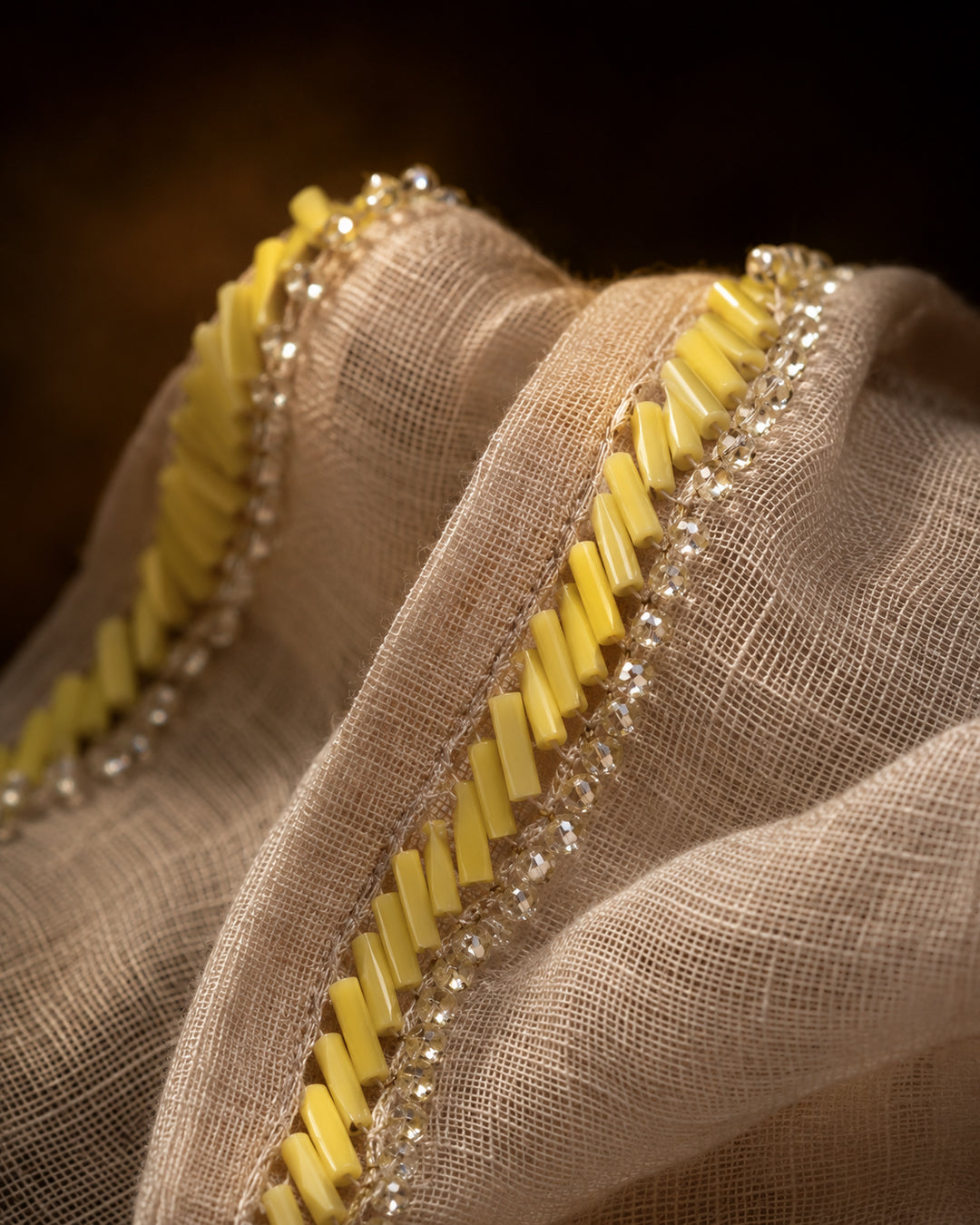
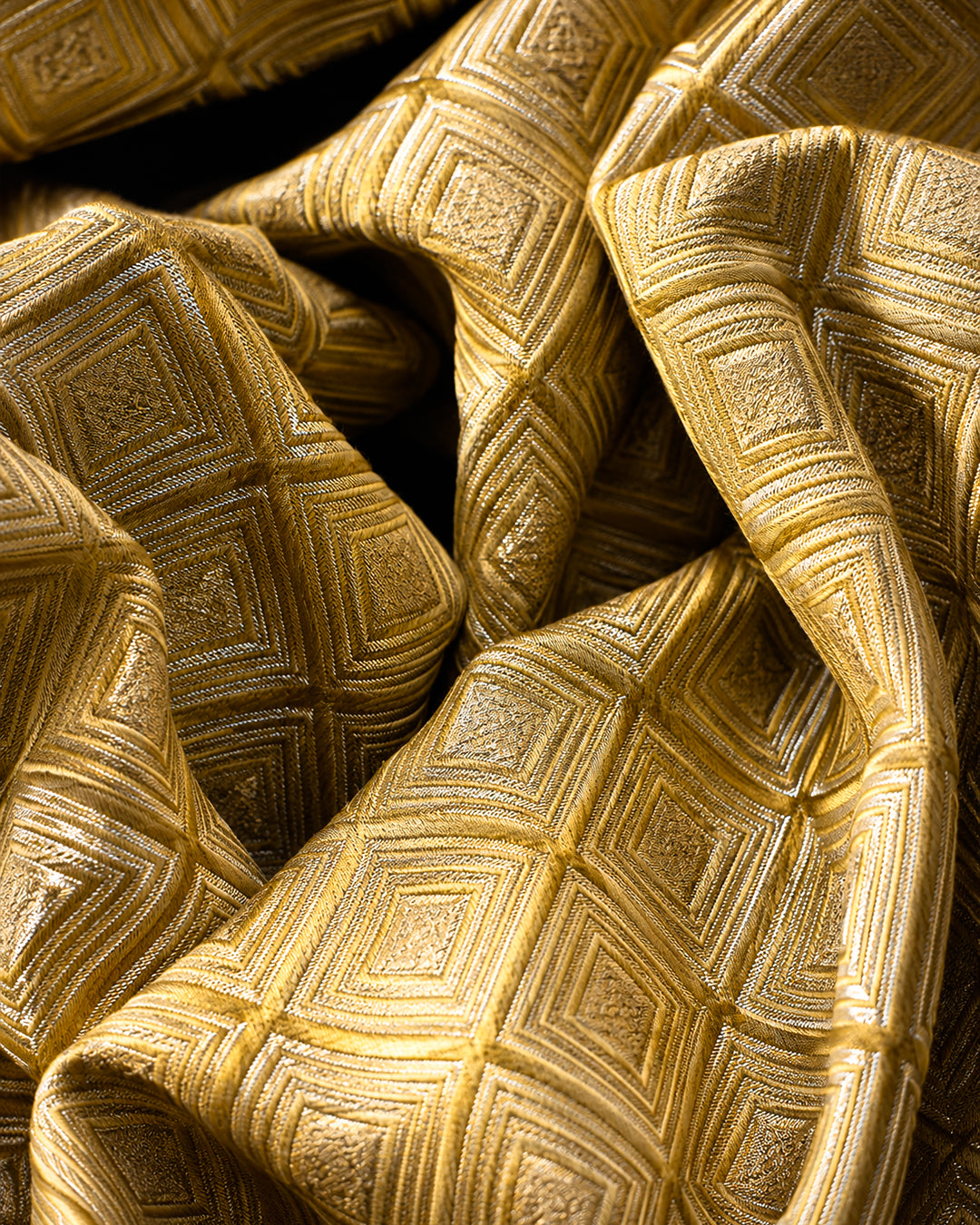
Today, designers across the region reinterpret this heritage with fresh imagination. Gold appears in fabric prints, delicate embellishment on sleeves or necklines, and refined accents that catch the light. The symbolism remains, but the expression evolves.
Across the region, designers bring their own voice to gold, shaping it through distinct aesthetics and cultural perspectives.
Designers Reimagining Gold in Modern Style
ACH draws from Saudi Arabia’s diverse cultural landscapes and storytelling. Gold appears through regional patterns and motifs often as fine embroidery on the abayas that adds depth and warmth without overwhelming the garment.
Flounge uses gold as a mark of elegance. A subtle shimmer within the fabric of a powder pink abaya creates a gentle radiance that moves with the wearer, elevating the garment while preserving Flounge’s refined silhouettes and understated sophistication.
Yarakech expresses the vibrancy of Marrakech and the bold femininity of the seventies and eighties. Gold appears in expressive prints and decorative trims, adding radiance to the brand’s colourful, architectural silhouettes. It also defines the form of the kaftan, particularly along cuffs and edges, creating a sculptural outline that enhances movement and character.
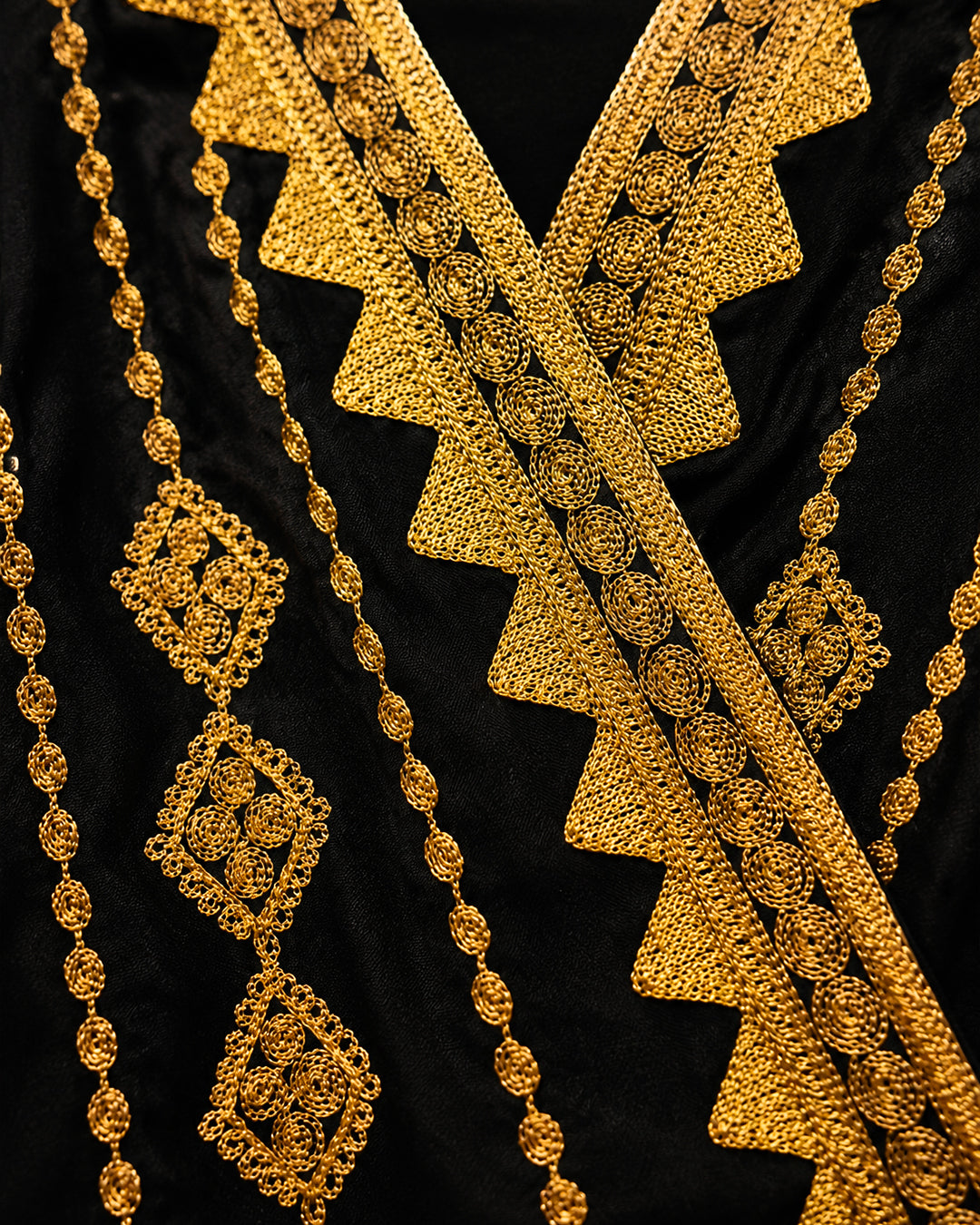
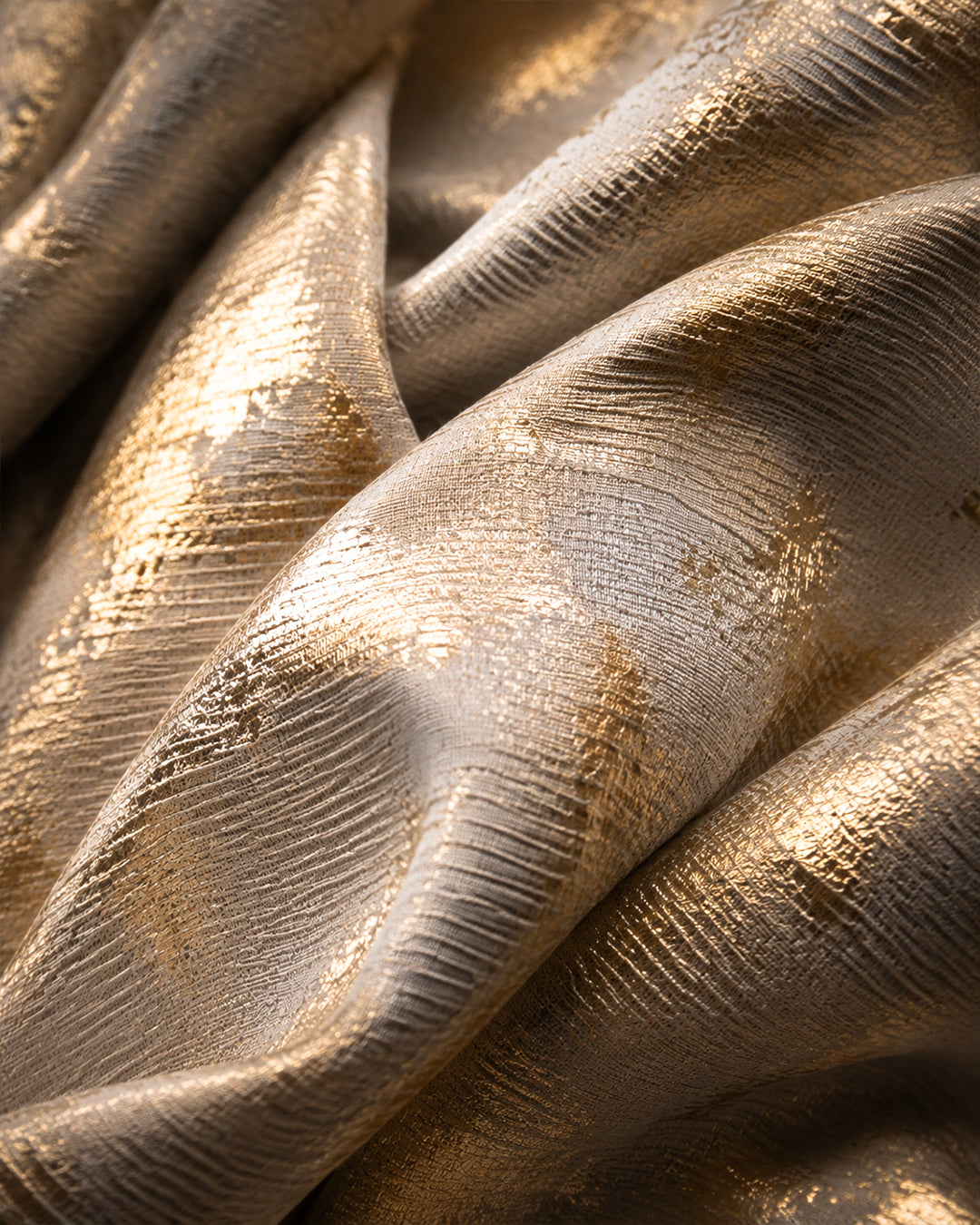
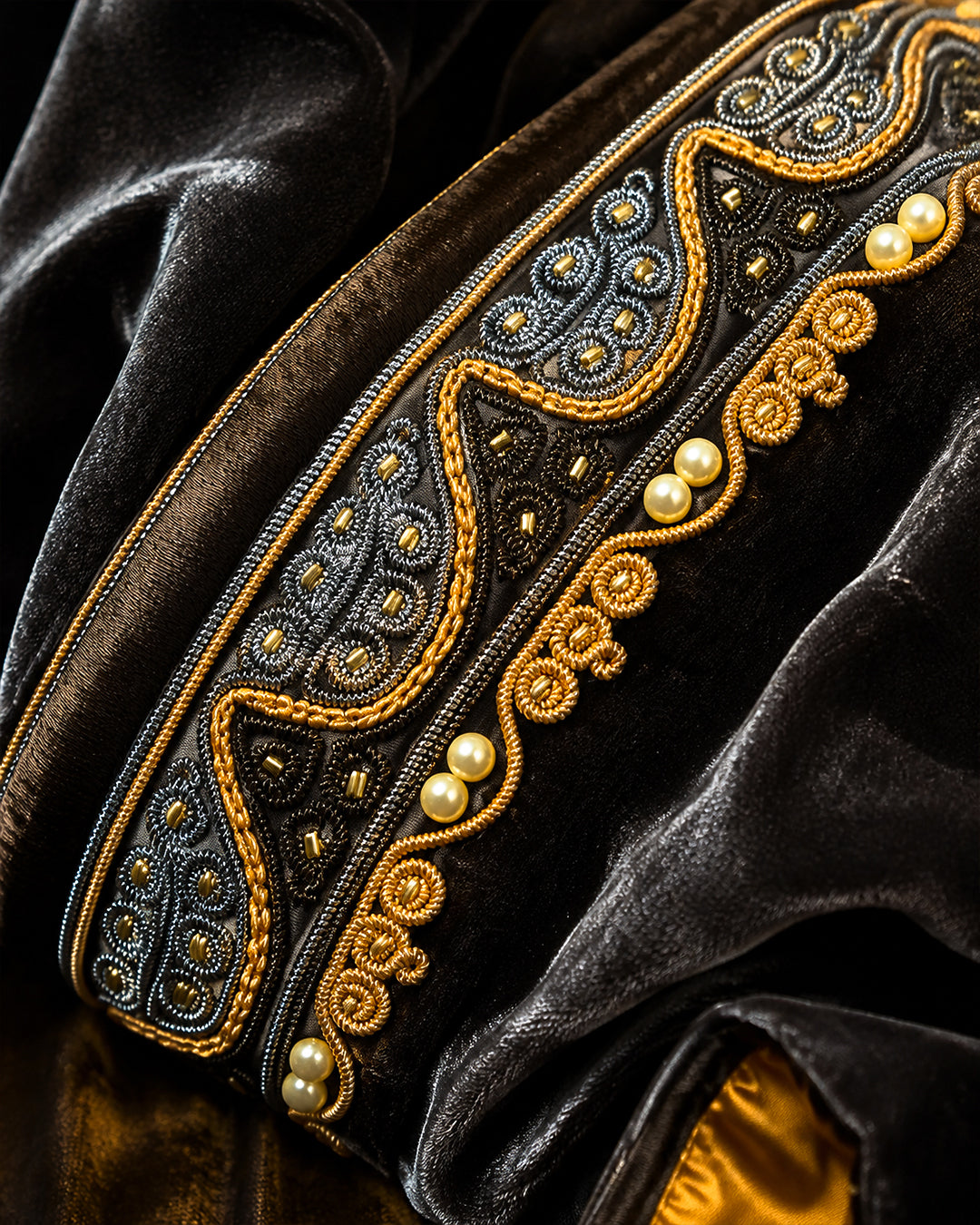
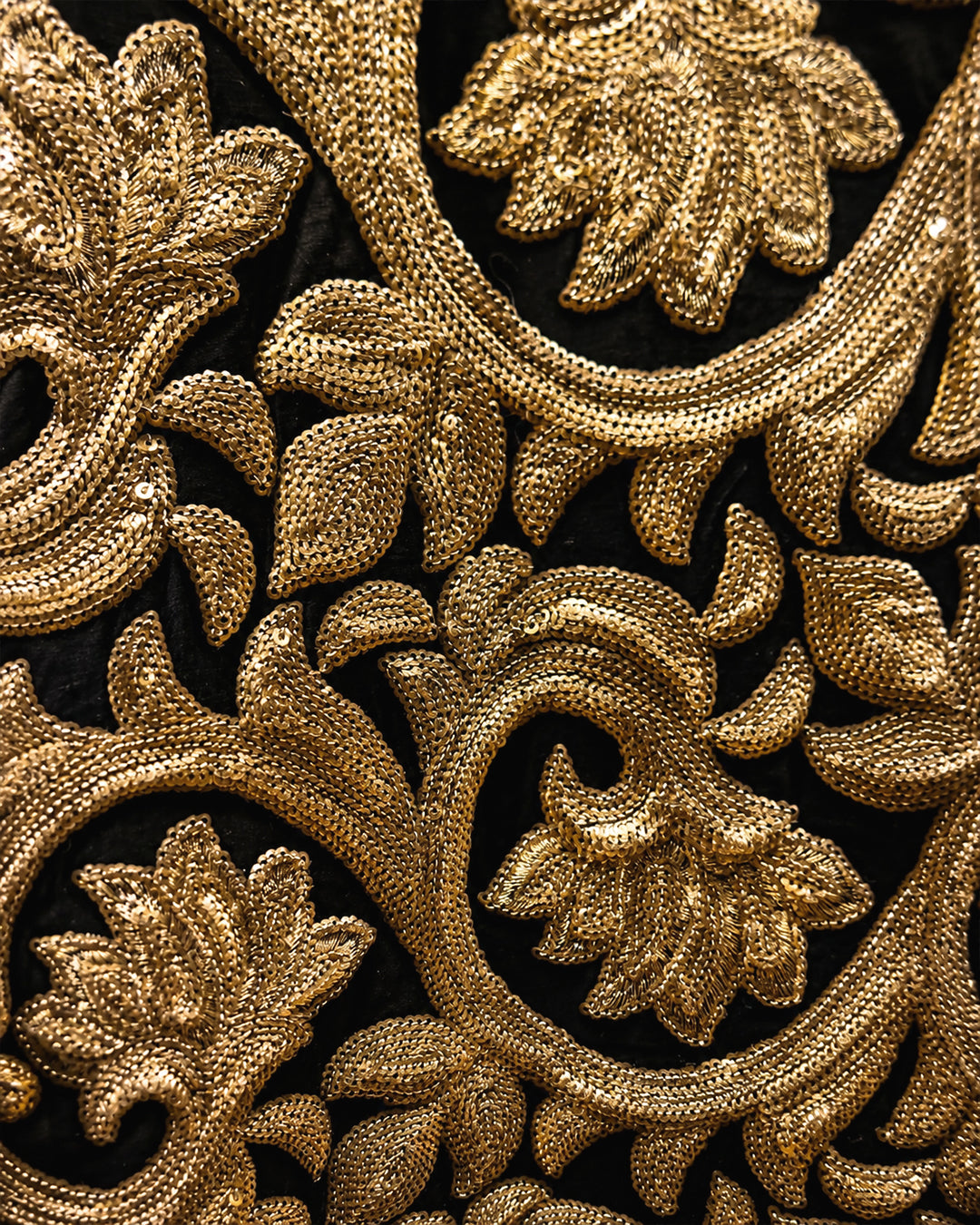
Dalsh Designs blends ethnic and modern influences. Gold threads appear in intricate embroidery and fine metallic detailing that catches the light. Dalsh often incorporates gold into waistcoats and batwing kaftans, where metallic accents sharpen the structure and emphasise the fluidity of the silhouette.
YMZ Cairo draws from Egypt’s rich legacy of craftsmanship and refined textile traditions. Each piece is handcrafted in Egypt using premium locally sourced cotton and finished with delicate hand embroidery. Gold appears as subtle detailing inspired by Egypt’s artistic heritage, adding a gentle radiance to designs shaped with contemporary sophistication.
La Reine uses gold to bring refinement and femininity to its designs. Gold accents appear in fabric patterns, fine trims and subtle highlights along necklines or cuffs. In kimono-style kaftans, gold frames the flowing silhouette, adding gentle structure and regal softness.
How Long Are Threads of Gold?
Across these designers, gold threads, whether embroidered, printed or embellished, carry the same message. Gold endures. In the hands of today’s designers, it becomes not only decoration but a conversation between past and present, illuminating the stories that shape the region’s creativity.