

Saudi heritage sits at the heart of ACH, shaping everything from its motifs and embroidery to the stories behind each piece. We spoke with Hanan Alturki about the cultural references woven into her designs, the early encounters with history and archaeology that shaped her creative outlook, and the ways she brings Saudi heritage into a contemporary fashion language.
What draws you to the ideas or materials that spark a new ACH creation?
My designs often begin with a story or a detail that catches my attention, rather than with the fabric itself. It could be an archaeological piece, an old decorative motif, a historical photograph, or even a small detail from Saudi heritage that makes me wonder: How can I tell this story in a new way?
From there, I begin searching for the right fabric, embroidery, and colors. To me, fabric is not simply a material; it is part of the story. I like every detail in a piece to have a reason and a meaning, and eventually, the original idea becomes a contemporary piece that carries the spirit of ACH.
Which cultural influences or personal stories shape the identity of ACH pieces?
Saudi culture and heritage have a very strong influence on the identity of ACH, especially because I grew up close to the world of history and archaeology. My father was an archaeology expert who worked with UNESCO in Paris, and this shaped my relationship with history from a young age. I learned to see history as a collection of stories and details waiting to be discovered, rather than simply something from the past.
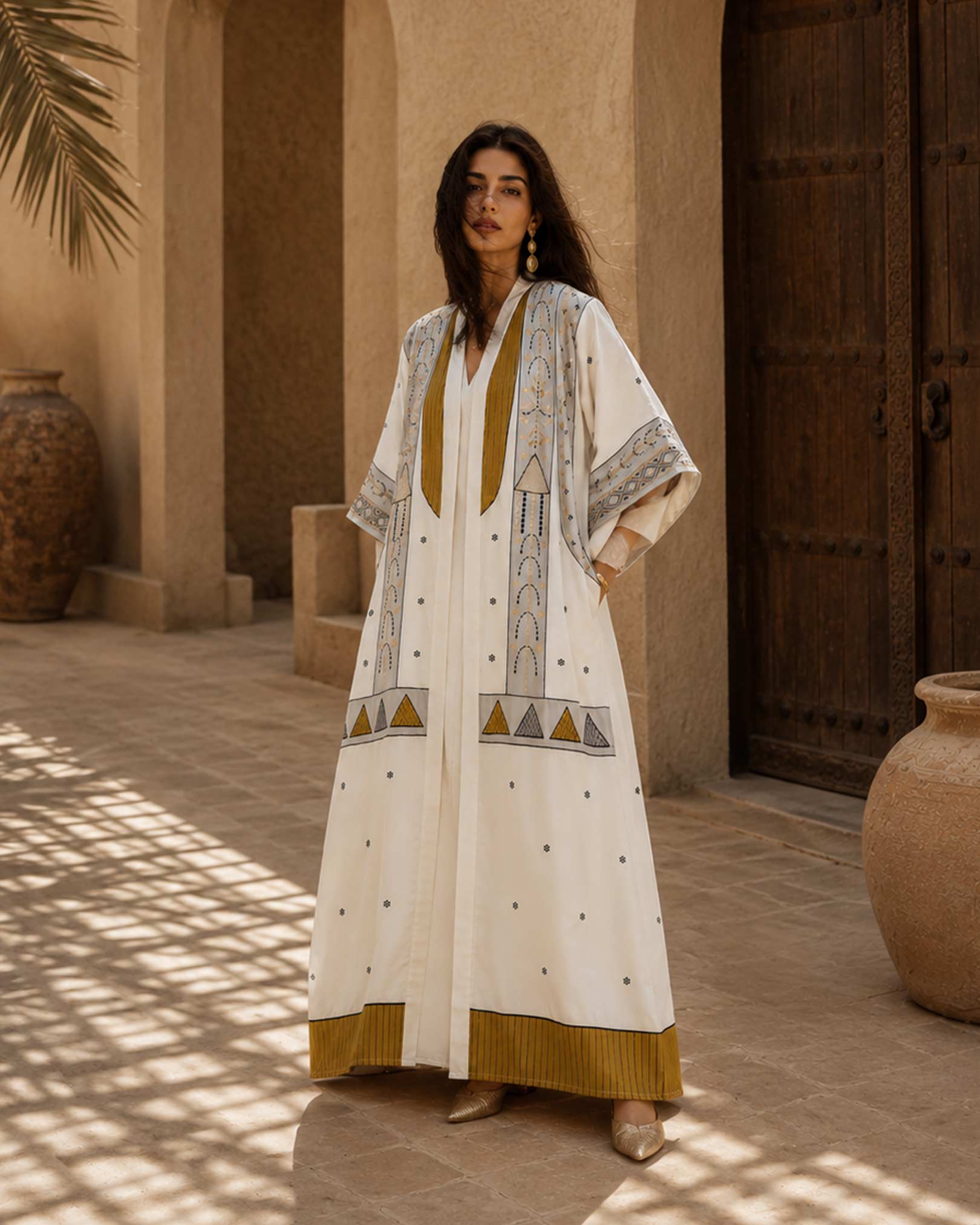
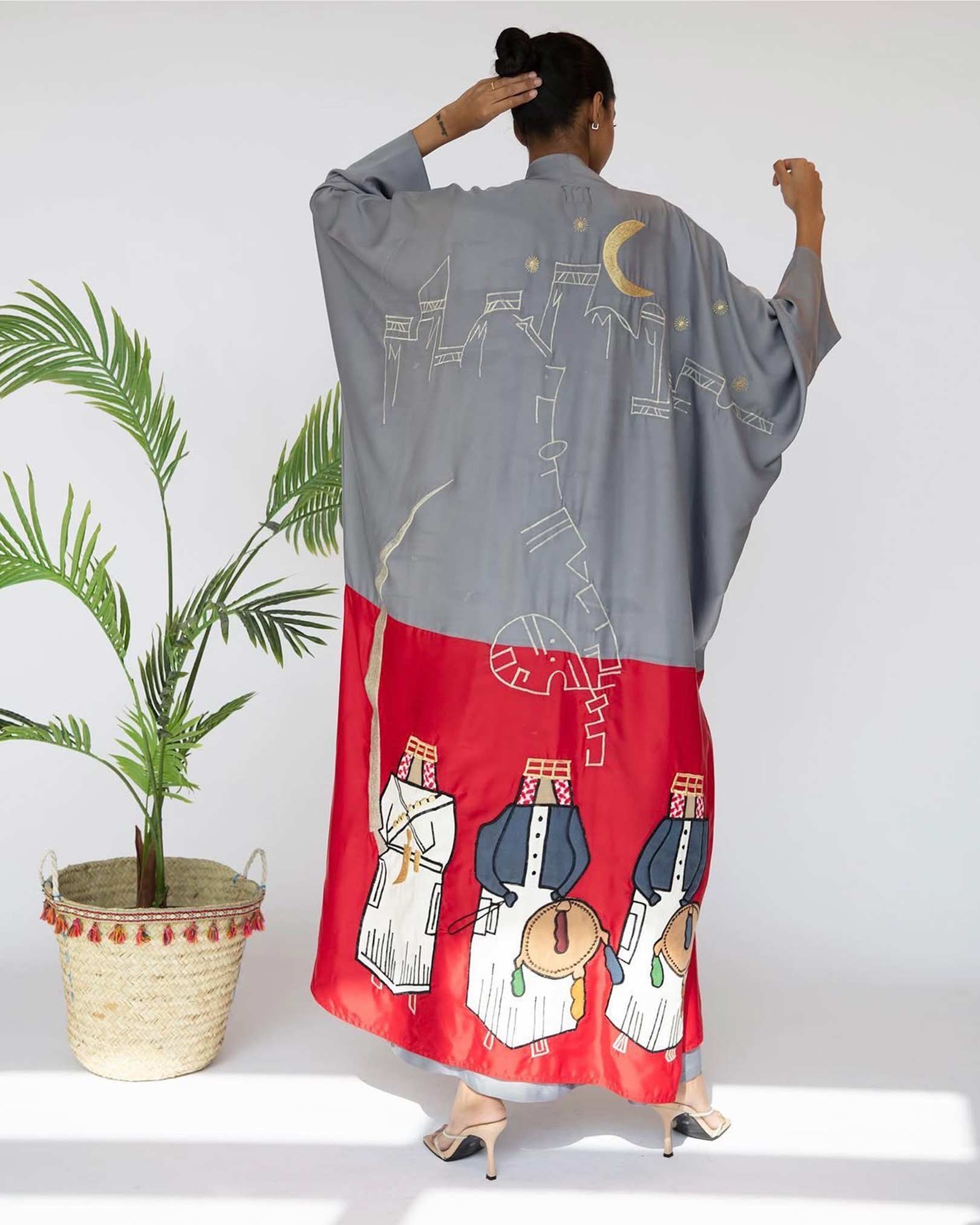
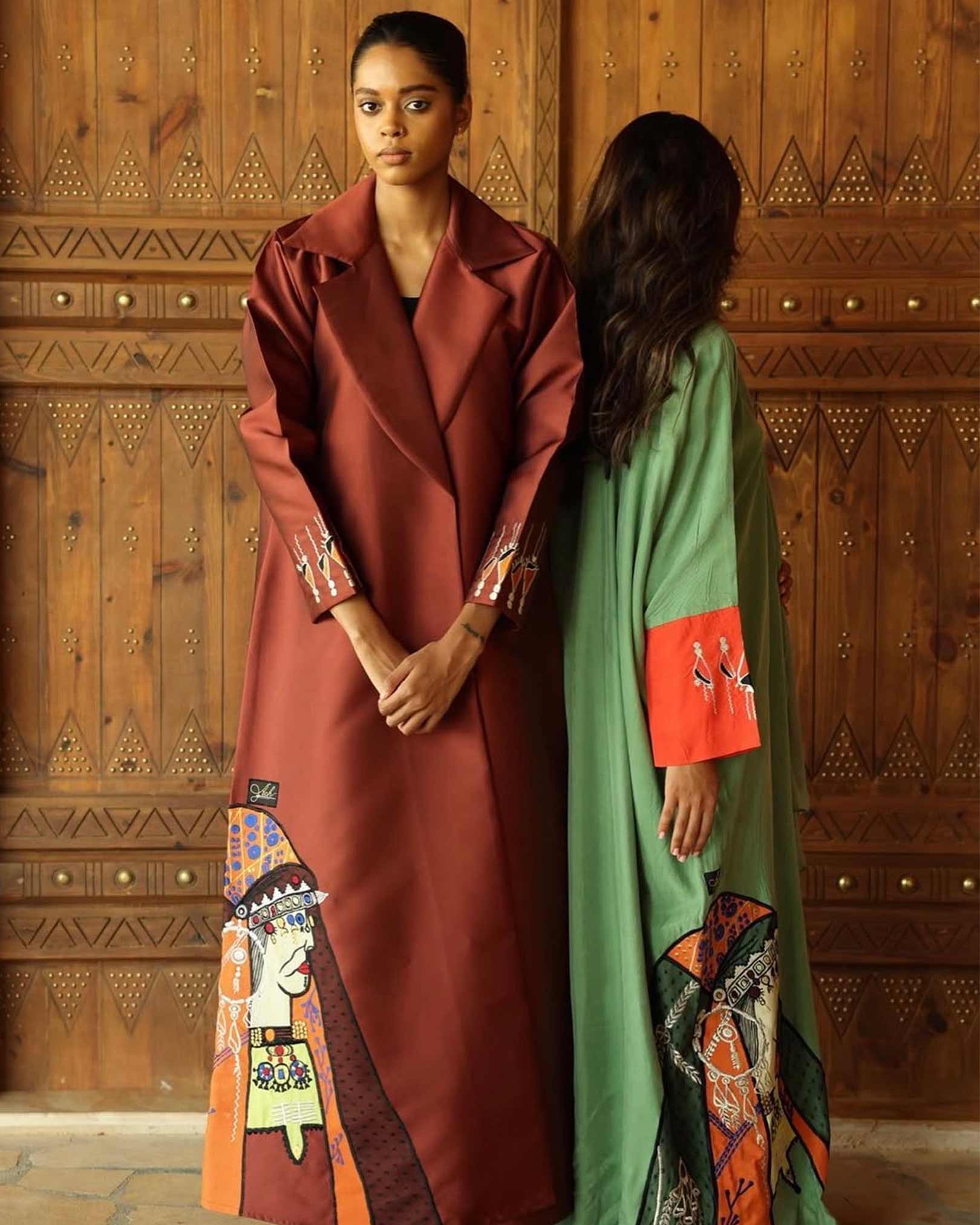
Many ACH pieces are therefore inspired by different regions of Saudi Arabia, from traditional clothing and architectural motifs to jewelry and traditional embroidery. I always try to reinterpret these elements in an artistic and contemporary way, preserving the original story while giving it a new life.

What emotion do you hope people feel when they encounter your work?
The first thing I hope they feel is curiosity. I love when someone looks at a piece and asks: What is the story behind this illustration? What does this embroidery mean? Where did this idea come from?
Once they discover the story, I hope they feel the beauty and richness of Saudi culture. My goal is for an ACH piece to be more than just a beautiful abaya; I want it to feel like a piece of art that tells a story and stays in your memory long after you have seen it.
What defines the woman who chooses to wear ACH?
To me, the ACH woman is confident and appreciates being different in an elegant way. She is not simply looking for something beautiful or something that follows trends; she wants to wear something with character and a story.
She appreciates art and details, and she enjoys expressing herself through what she wears. Most importantly, when she wears ACH, I want her to feel that the piece represents her individuality rather than simply looking like what everyone else is wearing.
What was the proudest moment in your journey so far?
One of my proudest moments was seeing ideas that began as small sketches and stories evolve into pieces that represent Saudi culture and reach people and places beyond the Kingdom.
I am particularly proud of participating with two pieces in an occasion connected to the documentation of the traditional gypsum decorations of Al-Ahsa with UNESCO. Through these designs, I was able to create a connection between Saudi jewelry, architectural heritage, and contemporary fashion.
Today, when I see ACH being showcased outside Saudi Arabia, I feel that the dream has grown beyond simply designing abayas. For me, ACH has become a way to introduce the world to a part of our Saudi culture and identity through art and fashion.