

At The Opulent, Arabic heritage is not treated simply as a reference to the past, but as something to be lived with. Calligraphy moves beyond the page into sculptural objects, while fragrance draws on traditions of scent, hospitality and the rituals of the home. We spoke with Hanan Ashtal about the histories behind The Opulent’s design language, the cultural significance of the written word, and her approach to bringing heritage into contemporary spaces through form, scent and everyday objects.
What inspired the vision behind The Opulent?
The Opulent was born from a desire to see Arabic heritage represented in a way that felt contemporary, considered and relevant to modern living. We wanted to create pieces that carry elements of our culture and traditions, but that also feel at home in beautifully designed contemporary spaces. At its heart, The Opulent is about bringing heritage into the everyday — through scent, objects and the rituals we create around them.
Why did you choose Arabic calligraphy as the foundation of your design language?
Writing has carried the stories of our region for thousands of years. From the inscriptions and scripts of ancient Babylon and the civilisations of the Nile to the ancient South Arabian scripts of kingdoms such as Himyar, and eventually to the extraordinary art of Arabic calligraphy, the written word has always been a way of recording who we are, what we believe and what we leave behind.
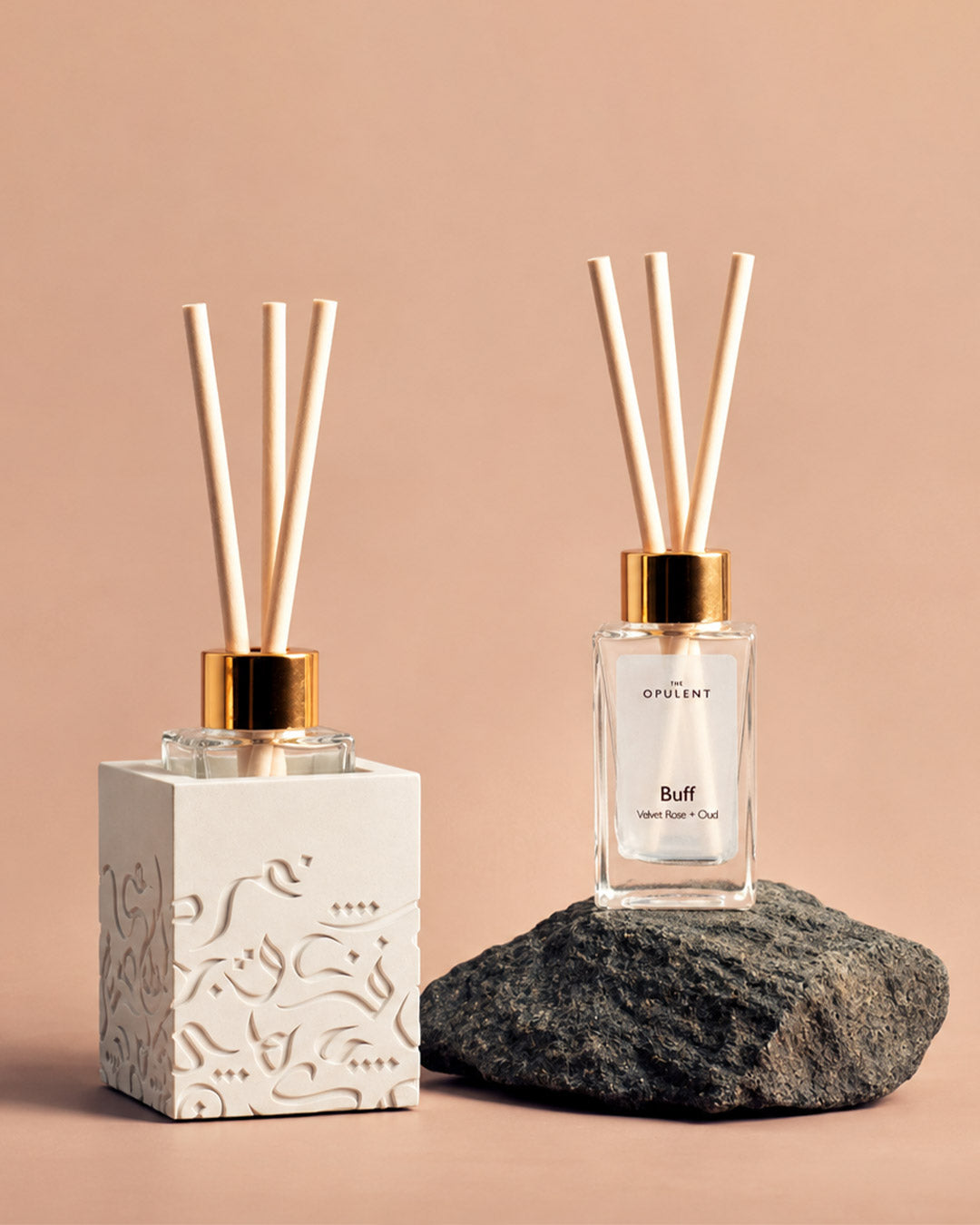
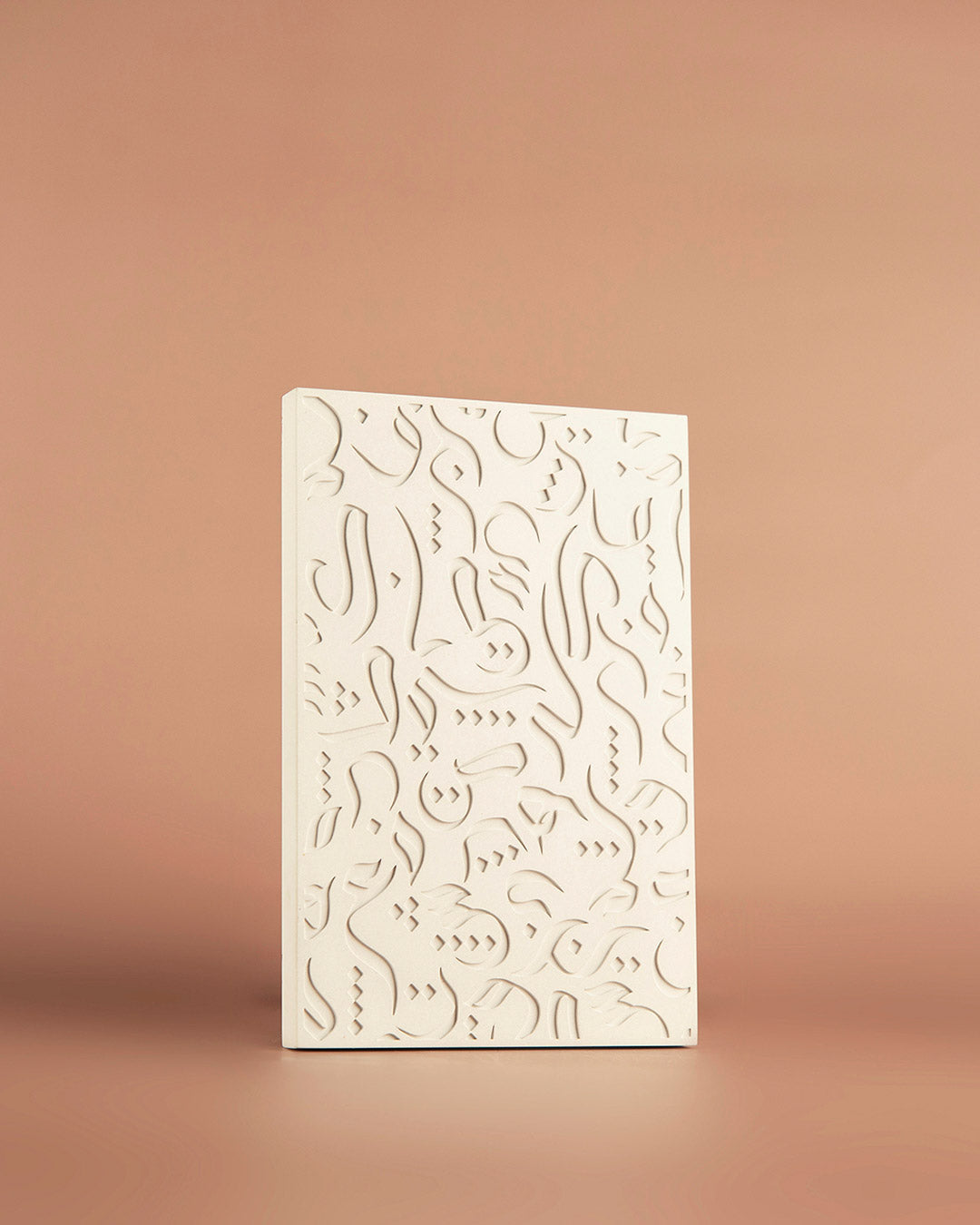
History is a constant source of inspiration for The Opulent, and Arabic calligraphy allows us to carry that history forward. It is not simply decoration; it carries language, memory and identity. With The Opulent, we wanted to take that legacy of the written word and give it a contemporary physical form — transforming calligraphy into objects that can be touched, used and lived with.
For us, it is about taking something shaped by history and allowing it to make history again, carrying a piece of that cultural story forward into a new generation.

How does Arabic heritage shape the style of your homeware and fragrances?
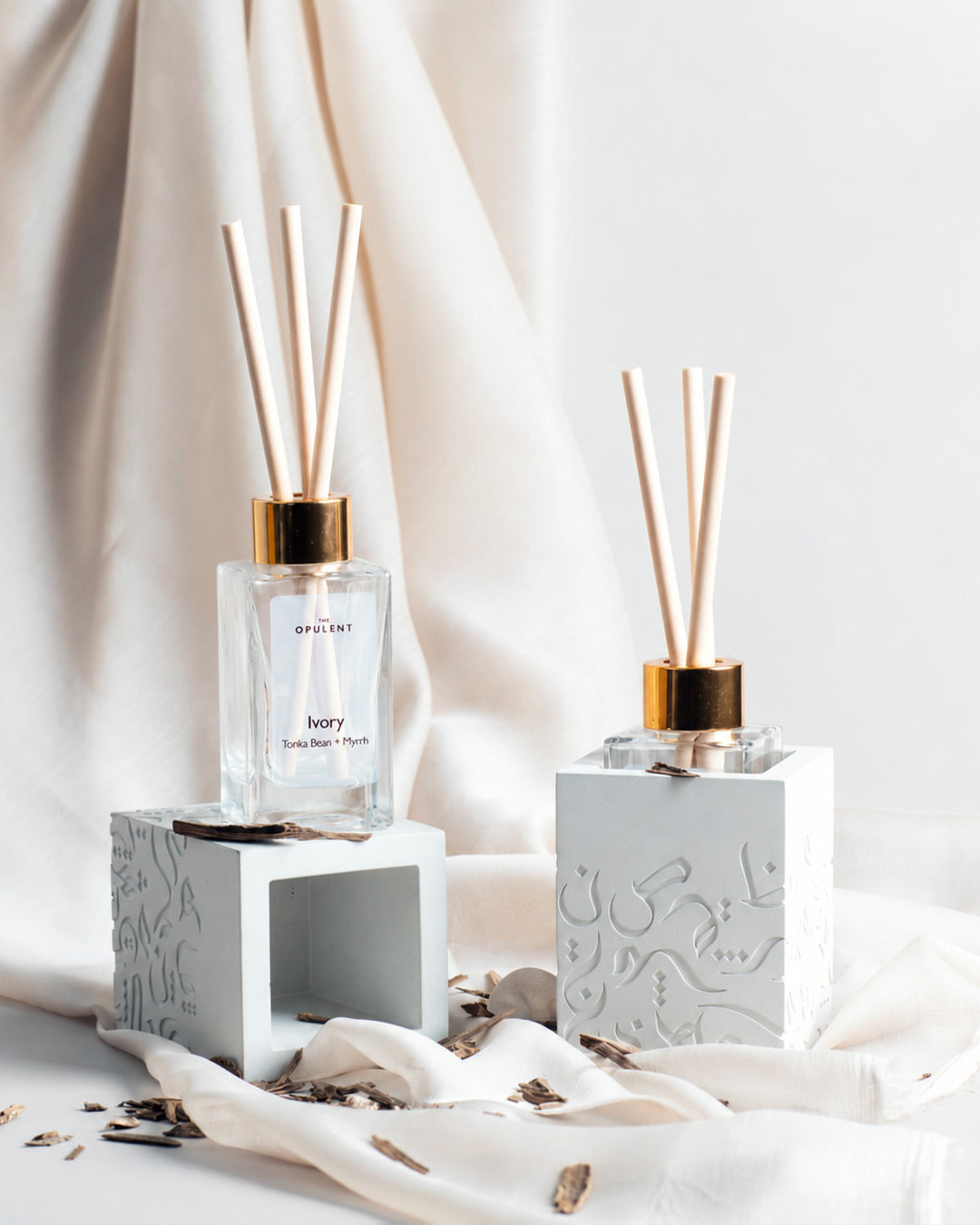
It influences everything from the materials and calligraphy to the rituals behind the products. Fragrance, particularly, has such a deep connection to the Arabic culture — whether through bakhoor, oud or the tradition of scenting the home and welcoming guests. We take inspiration from those traditions without trying to recreate them exactly. The aim is to preserve their spirit while expressing them through a quieter, more contemporary design language.
What atmosphere do you hope your pieces bring into a modern space?
We want each piece to bring a sense of the Arab world into the modern home — through its language, scent, and traditions. Through the presence of Arabic calligraphy and fragrances that evoke memory and emotion, we want our pieces to create a meaningful connection to heritage. For those who share that heritage, we hope it feels familiar and meaningful, and for those discovering it, we hope it offers a beautiful introduction to the richness of the Arabic culture. Ultimately, we want The Opulent to bring a piece of our world into the spaces we live in today.
Which moment has been most defining in your creative journey?
Seeing the first designs move from an idea into a physical object was incredibly defining. There is something quite emotional about seeing calligraphy that began as a drawing become part of a sculptural piece that someone can bring into their home. It made us realise that The Opulent could be more than a collection of products — it could become a way of preserving and reinterpreting elements of Arabic heritage through contemporary design.