

A handcrafted object brings more than decoration into a room. Its material, technique and place of origin become part of the interior, giving it a character that cannot be achieved through mass-produced pieces alone.
Across contemporary Middle Eastern design, traditional forms and craft techniques are increasingly being interpreted through objects made for modern homes. Porcelain, wood, metal, mother-of-pearl and natural fibres appear in pieces that are functional, decorative and often highly collectible.
Rather than recreating heritage literally, many designers use it as a starting point. Familiar patterns, social rituals and regional materials are translated into objects that feel relevant to contemporary interiors while retaining a clear connection to where they come from.
Table of Contents
Craft and heritage in contemporary design
The strongest heritage-inspired objects do not feel like reproductions of the past. They take recognisable visual references and give them a new form, scale or function.
Herfah’s hand-carved and hand-painted porcelain pieces, for example, draw on Al-Qatt Al-Asiri, the traditional decorative art associated with the Asir region of Saudi Arabia. Geometric compositions and vivid colours are applied to clean, contemporary forms, allowing the pattern to remain central.
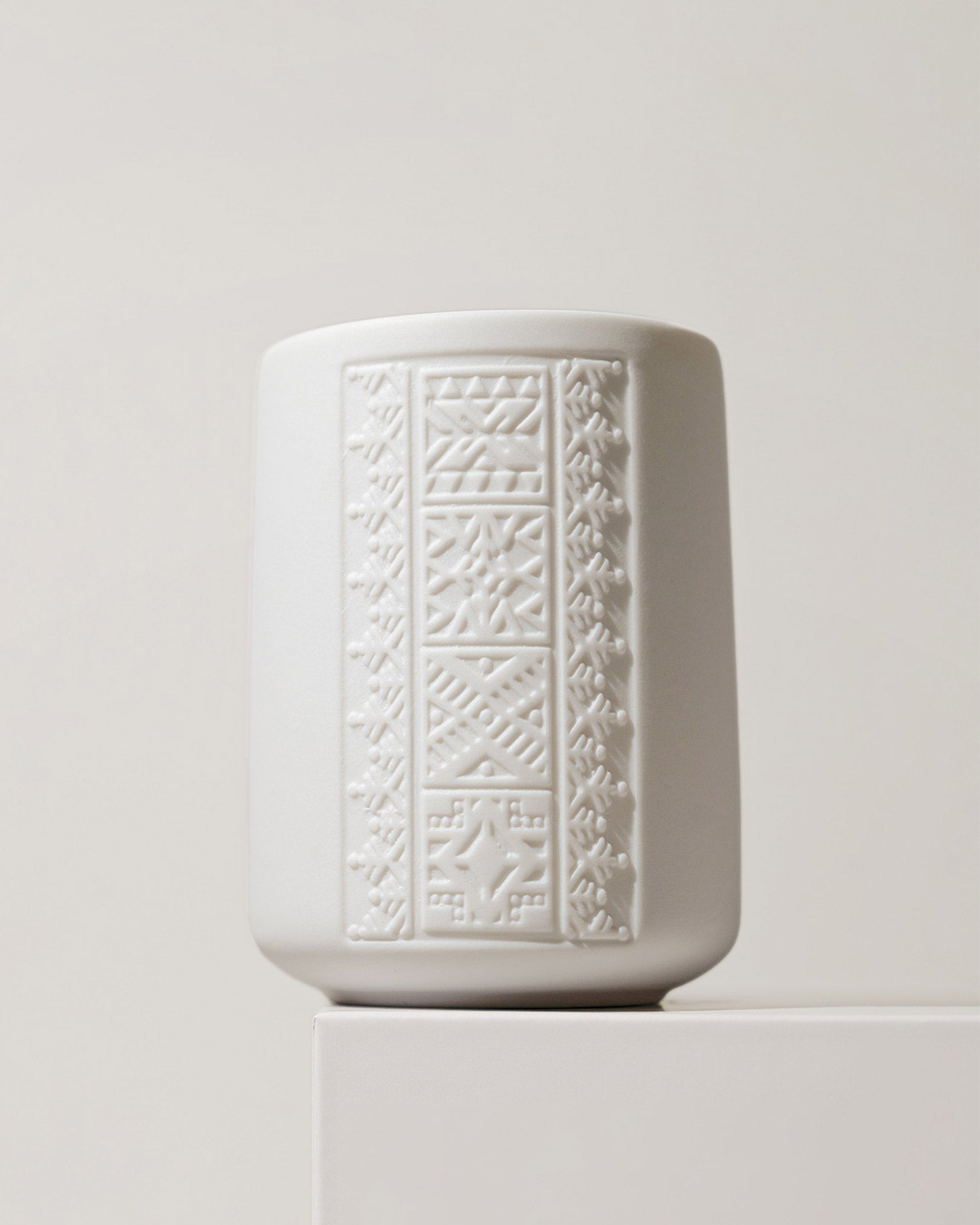
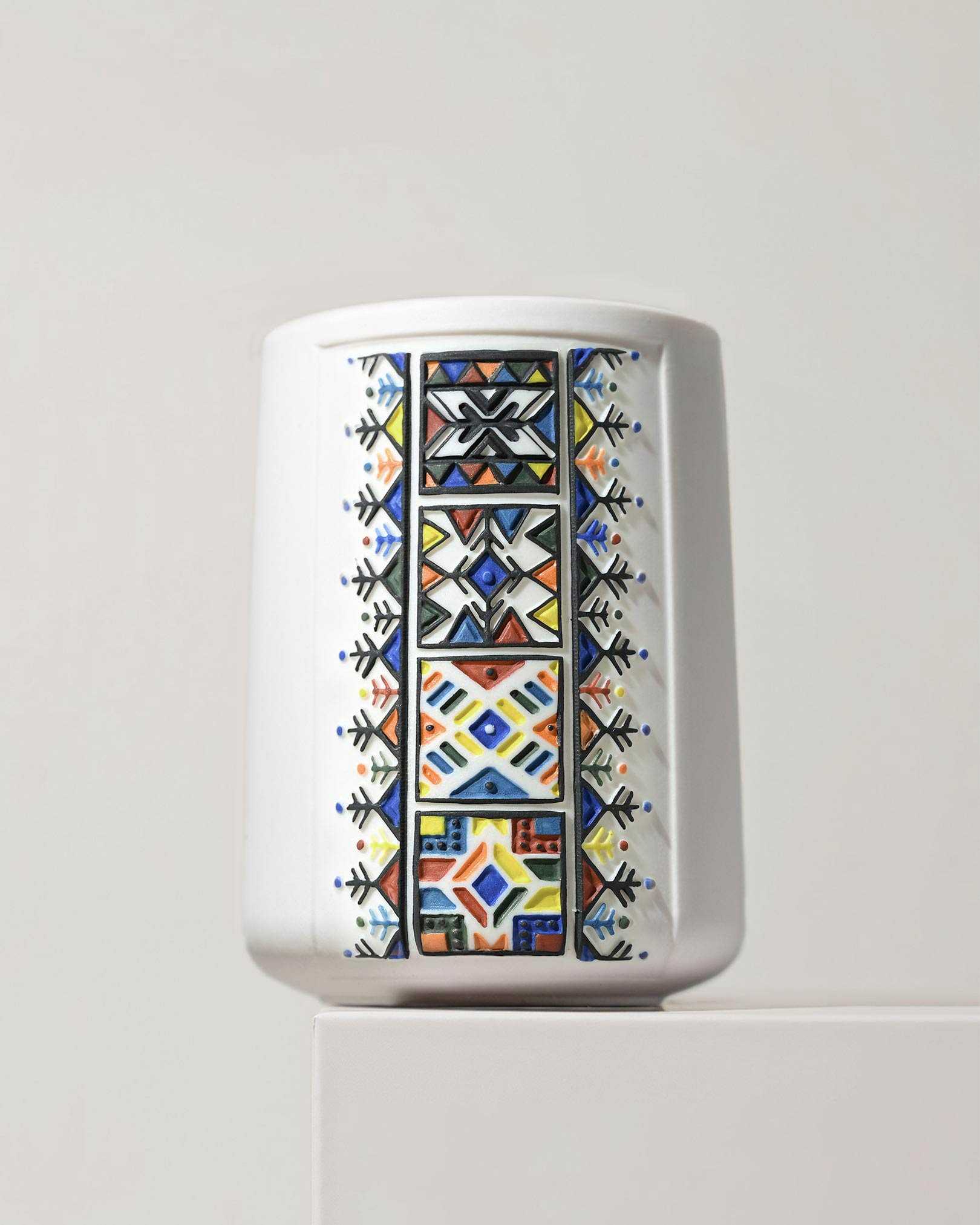
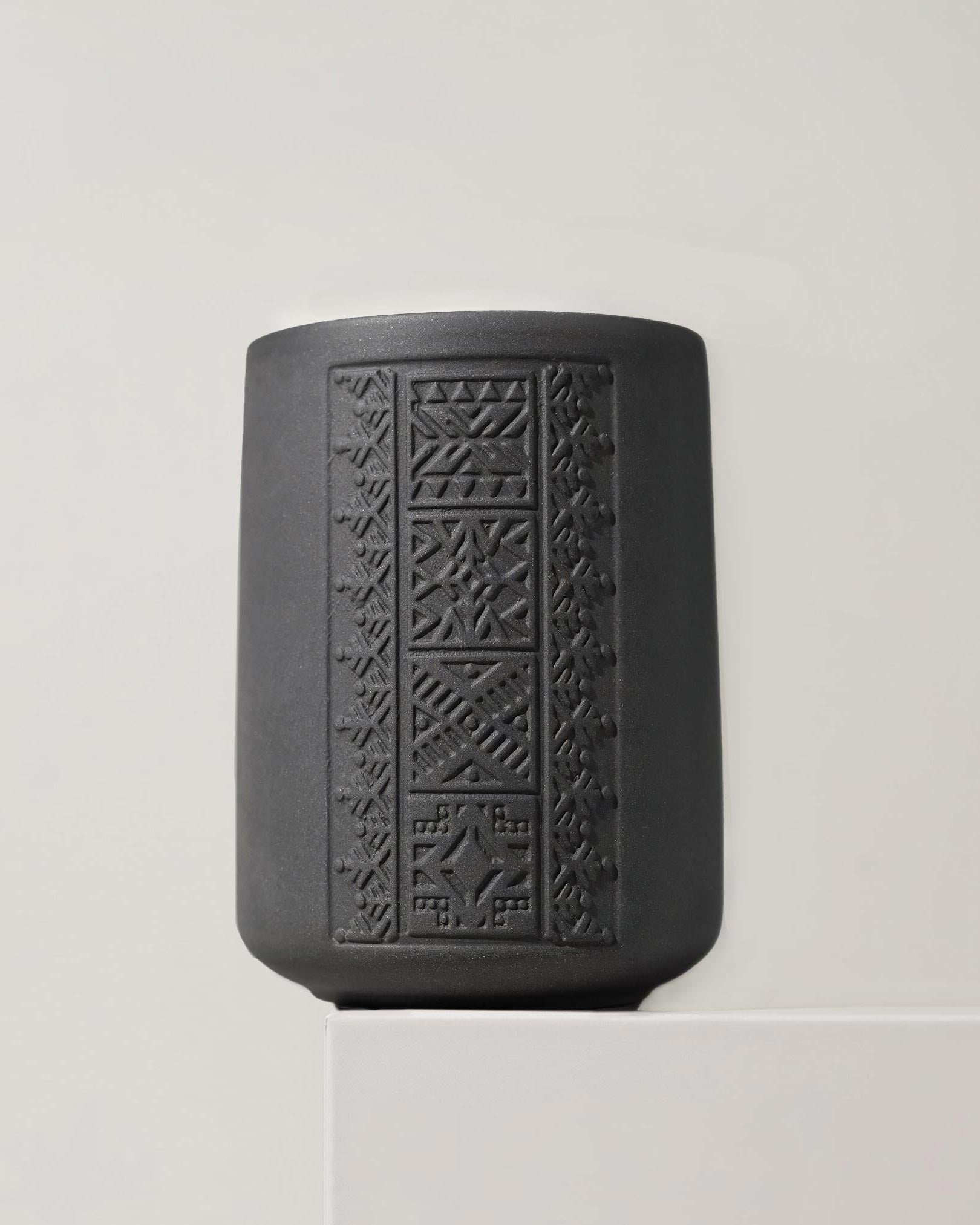
The coloured pieces are an easy way to bring pattern into a room without making the space feel too busy. On a console, shelf or side table, they work well as individual accents, particularly against a more neutral backdrop. The white and dark porcelain versions have a different effect: without the colour, the eye is drawn more to the carving, shape and texture of the piece itself.
This balance between reference and restraint is what makes these pieces work so well in contemporary interiors. They retain a clear connection to their cultural origins without dominating the room around them.
When functional objects become art
The line between decorative and functional design is not always clear. A tray, vessel, game or incense burner may have an obvious practical purpose, but the right form and material can give it the presence of a sculptural object.
The Naqsh Incense Burner by Xena Kalouti is a good example. Its elongated shape and combination of wood and metal make it as visually striking as it is functional. By Rahina’s Moon God Sin Candleholder works in a similar way, drawing on an ancient regional form while still feeling entirely at home in a contemporary interior.
Pieces like these tend to work best when they are given some space. A single incense burner, vessel or candleholder can become a focal point on a shelf, console or table, rather than competing with a collection of smaller decorative objects.
The result feels more intentional, and gives the materials, shape and craftsmanship of each piece room to stand out.

Games as collectible design
Traditional games occupy an interesting space between use and display. They are made to be played, but when the materials and craftsmanship are strong enough, they can also become part of the room itself.
The Qormuz Saudi Baloot Set is a good example, presenting a game closely associated with social gatherings in Saudi Arabia in a carefully designed box. Xena Kalouti’s backgammon and tic-tac-toe sets take a similar approach: these are pieces that do not need to disappear into a cupboard once the game is over.
Wood, brass and mother-of-pearl give them a sense of weight and permanence. Left on a coffee table, console or side table, they become part of the interior; in use, they return to what they were made for - play, conversation and time spent together.
That dual role makes handcrafted games particularly well suited to living rooms, libraries and reception spaces. They reflect the social life of the home, where objects become part of hospitality and shared rituals.
The importance of material and texture
Material often shapes how an object is experienced before its function is even considered.
Carved porcelain catches the light differently from a smooth glazed surface. Wood brings warmth through its grain and natural variation, while hammered or aged metal has a finish that is difficult to replicate uniformly. Mother-of-pearl shifts subtly with the light and changes as you move around it.

These variations are part of the character of handcrafted design. Uneven glazing, natural markings and differences in grain are not necessarily imperfections; they reveal something about the material and the way the object was made.
Texture becomes especially noticeable in more restrained interiors, where there is less colour or visual clutter competing for attention. A carved porcelain piece, a wooden box or an inlaid board game can add depth and interest without changing the overall mood of the room.
From small objects to collectible furniture
Artisan home décor can extend well beyond smaller decorative objects. Xena Kalouti explores the same attention to material and craftsmanship on a larger scale, moving into furniture and lighting.
Pieces such as the Pillar Symphony Table, Strata Table Lamp and Microcosmic Console are functional, but their scale, construction and visual detail place them closer to collectible design than conventional furnishings.
A sculptural table or console can define an entire area of a room, while smaller objects can create subtle links through repeated materials, tones or forms. A mother-of-pearl backgammon set placed near an inlaid table, for example, creates continuity without making the space feel too deliberately coordinated.
Interiors like this tend to develop gradually, through pieces chosen for their individual quality and for the way they sit alongside one another. Over time, the room gains character through those connections, without feeling as though every element was selected to match.


Choosing artisan objects for the home
A handcrafted object does not need to fill an empty surface simply because the space is available. It should have enough room around it to be seen clearly and still feel connected to the rest of the interior.
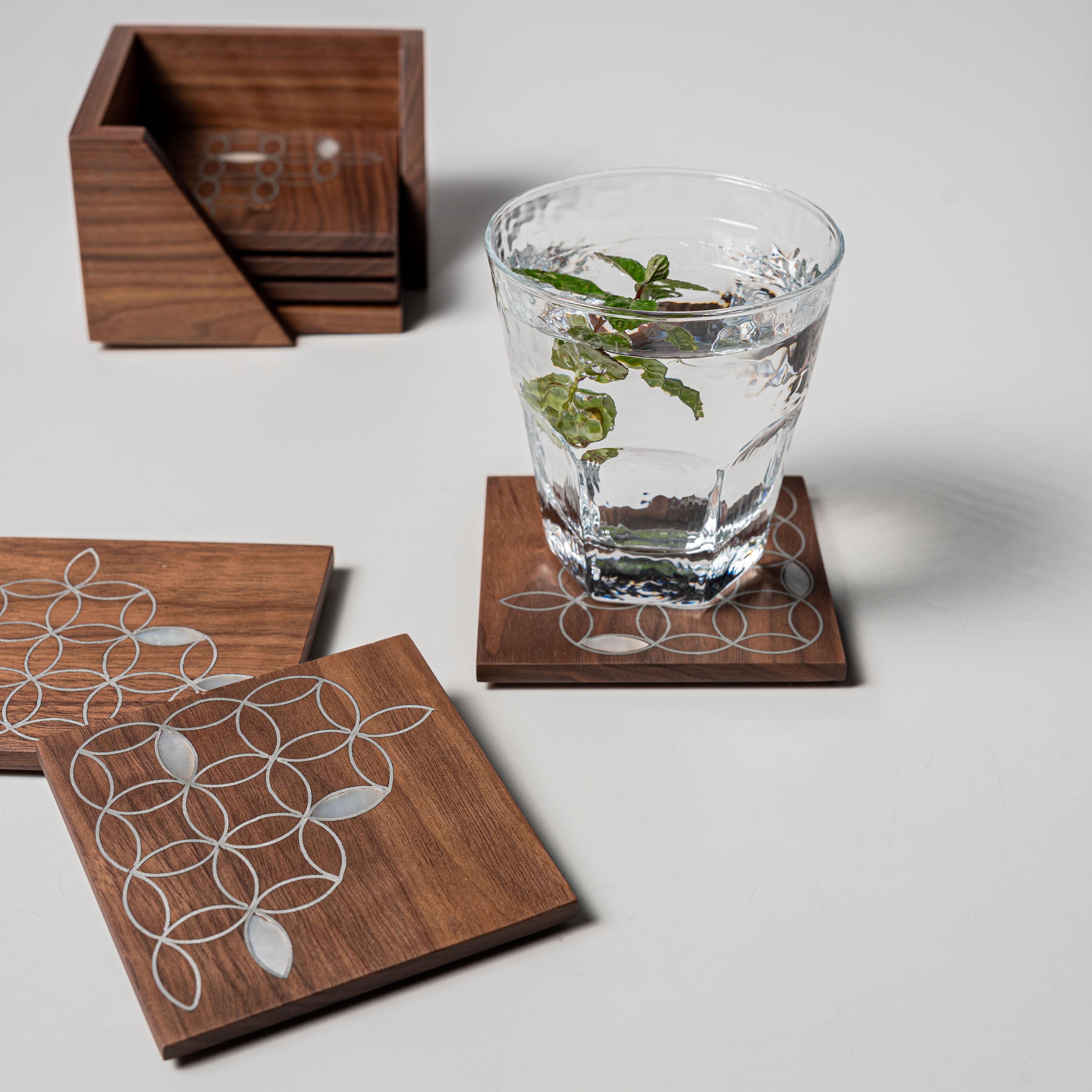
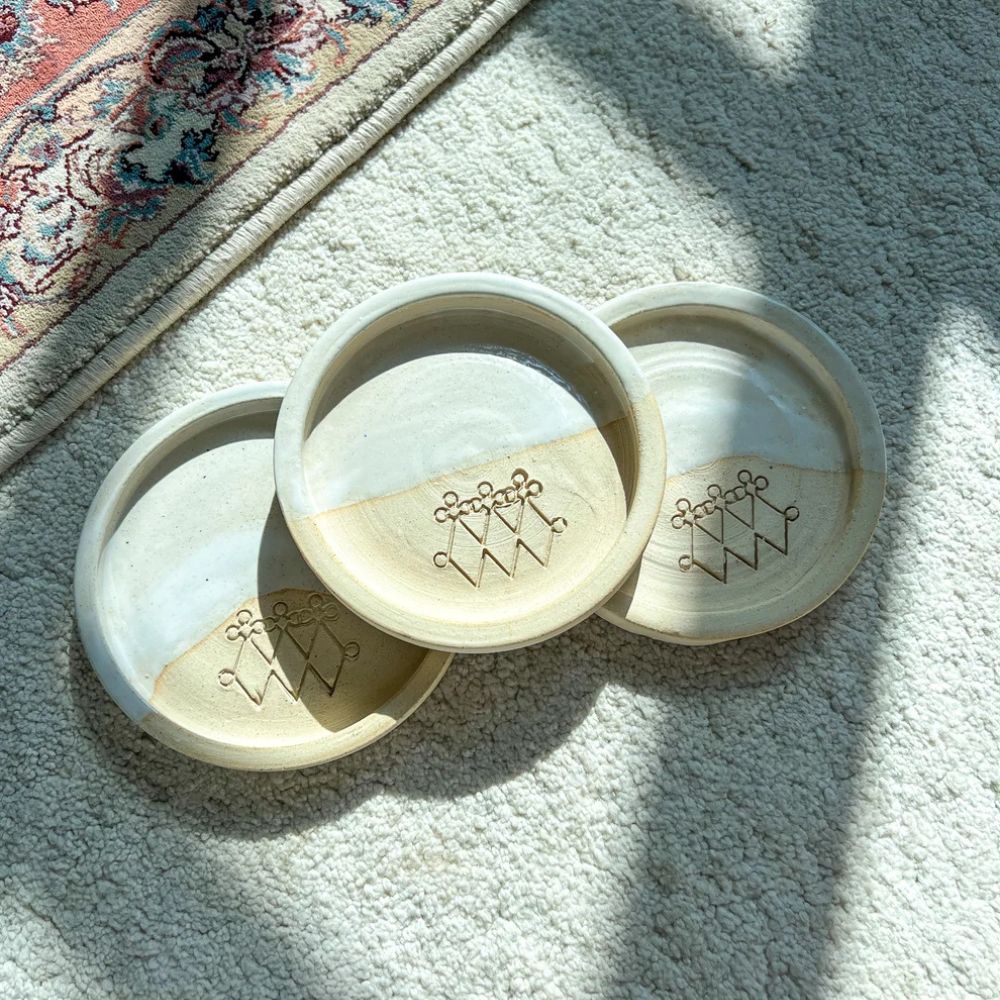
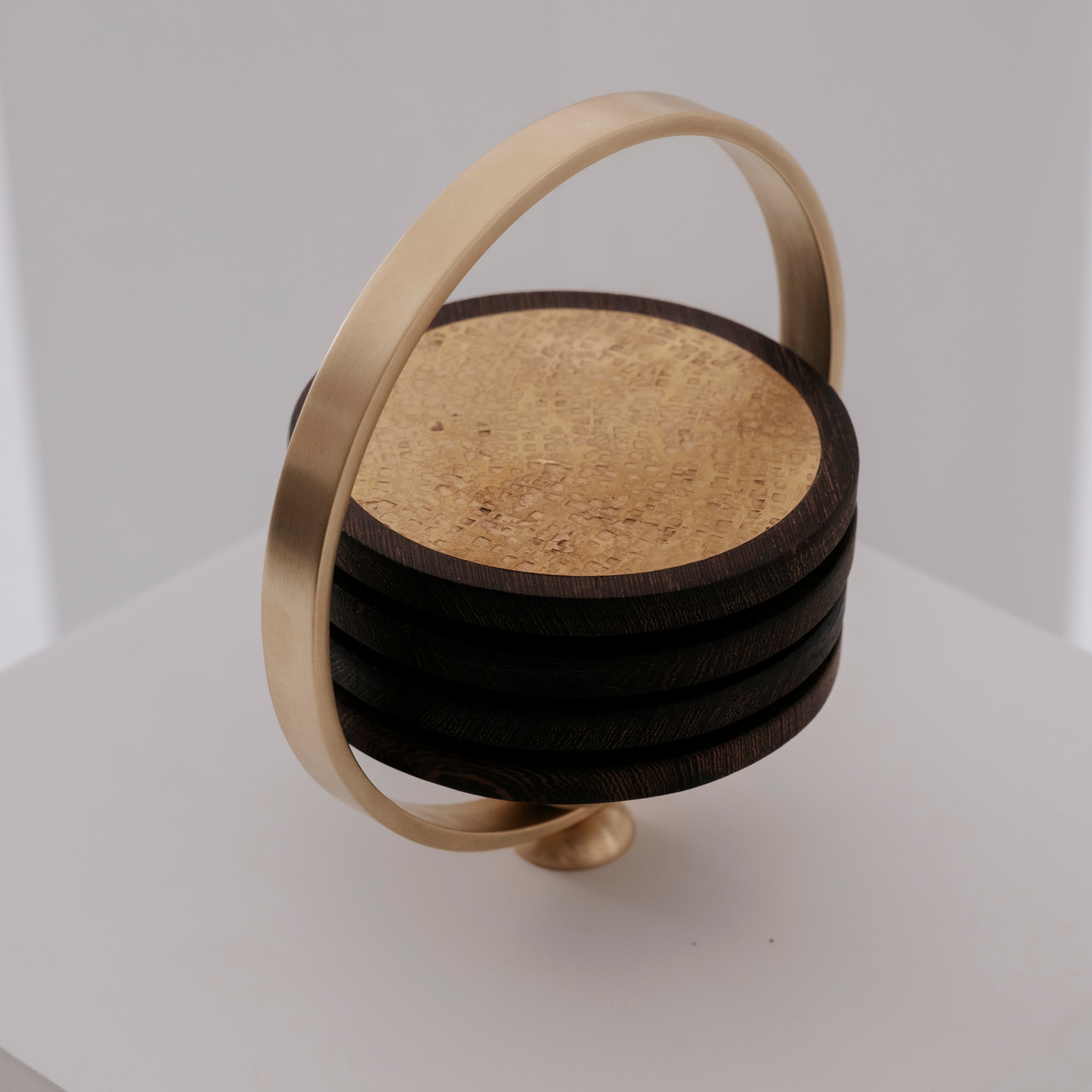
Scale is one of the first considerations. A small jewellery plate or set of coasters works naturally on a bedside table, dressing table or compact side table. A tall incense burner or table lamp needs more visual space. A board game, decorative box or large vessel may work best as the main object on a coffee table or console.
Material is equally important. In a room with polished stone and glass, wood or carved porcelain can introduce warmth. In an interior already rich in pattern, a monochrome object may create balance. More decorative pieces are often strongest when surrounded by simpler forms.
```html
```
It is also worth considering how the object will be used. An incense burner, game or set of coasters becomes part of everyday life, while a sculptural porcelain piece may be chosen primarily for display. Neither approach is more valuable than the other. What matters is that the object has a clear place and purpose within the home.
Artisan home décor at Lavish Concepts
The Lavish Concepts home collection brings together designers and makers from Saudi Arabia, Oman and Jordan, with work ranging from hand-decorated porcelain and incense burners to games, furniture and lighting.
Herfah preserves the visual language of Al-Qatt Al-Asiri through contemporary porcelain forms. By Rahina interprets regional history and social traditions through functional objects and games. Qormuz presents Saudi cultural references through refined contemporary design, while Xena Kalouti approaches everyday objects, furniture and games with the precision and attention to material usually associated with fine art.
Together, these pieces demonstrate that artisan home décor is not defined by a single style. It may be colourful or monochrome, decorative or restrained, functional or primarily sculptural. What connects the collection is a focus on material, craftsmanship and cultural context.
The result is a selection suited to interiors that develop gradually and feel personal: shaped by objects chosen to be used, discussed and kept, rather than by short-lived trends.